


Environmental monitoring is now an important stake for industrial manufacturers, which requires to have highly sensitive instruments to ensure people safety and pollution reduction. To avoid high maintenance costs and severe risks of pollution, gas transportation companies need to efficiently detect gas leaks all along the pipelines, from the production site to the consumers. Industrials from the Oil & Gas industry are also experiencing the same challenges around or within their facilities. They need to properly control their emissions of gases such as NOx , Methane, Ammonia, Oxygen, NO, SO2 , SO3 , SF6 etc.
Some detection options can be considered between chemical, electrical and optical solutions. Optical Gas Imaging (OGI) has been identified as the most relevant technic for gas detection. Exosens proposes to OEMs and companies working to maintain industrial structures some short wave infra-red (SWIR) or thermal imaging solutions. LWIR cameras have become a popular tool, either for routine inspection or failure diagnosis, beside other advanced NDT non-destructive testing technologies. Overall, thermal cameras secure predictive maintenance, while limiting inspectors’ expositions to hazardous areas and supporting these environmental monitoring challenges.
Need some answers? Ask our experts!
Contact us
The essential guide on
Gas Detection Solutions
Tracking emissions with smart, safe and actionable technologies
Methane Detection
It is crucial to choose the right technology to identify and quantify methane emissions and other natural gases.
Hyperspectral technologies can not only detect methane, but also other gases of interest, like hydrocarbons, NO2 , SO2 , as well as many other Volatile Organic Compounds (VOCs).
Whether it is on-the-ground or in the air, our hyperspectral technologies can help detect gases in real time. Collected infrared data gives you plume imagery, size, location, methane emission flux rates and more.
Completely safe for humans and also harmless to the environment, hyperspectral imaging is a key tool to reveal the invisible!
Our cameras can scan your facility and if methane or other gases are in the air, it will detect it and reveal where it is.
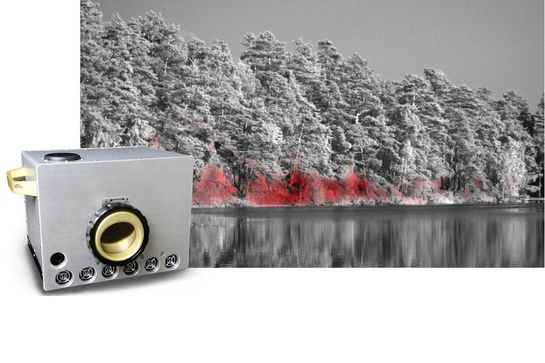
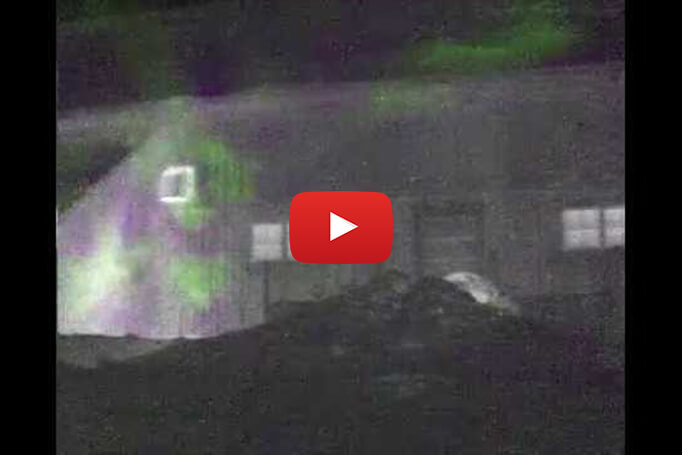
Scientists from Linköping University, in Sweden, were able to film methane emissions in real time. Their results were published in the prestigious journal Nature Climate Change. You can watch the video on how hyperspectral can play a significant role in the fight against climate change.
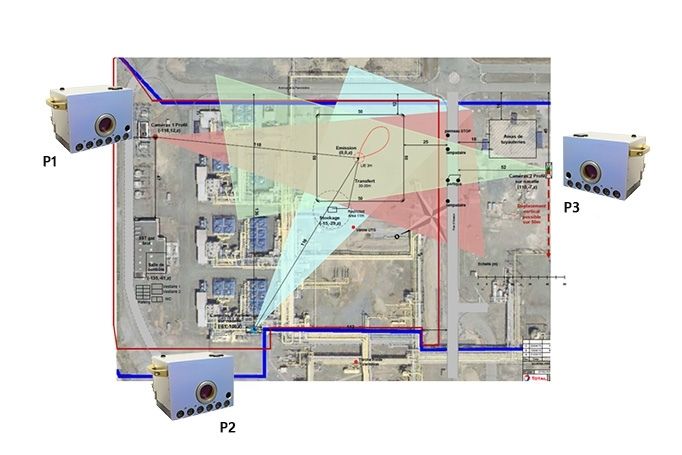
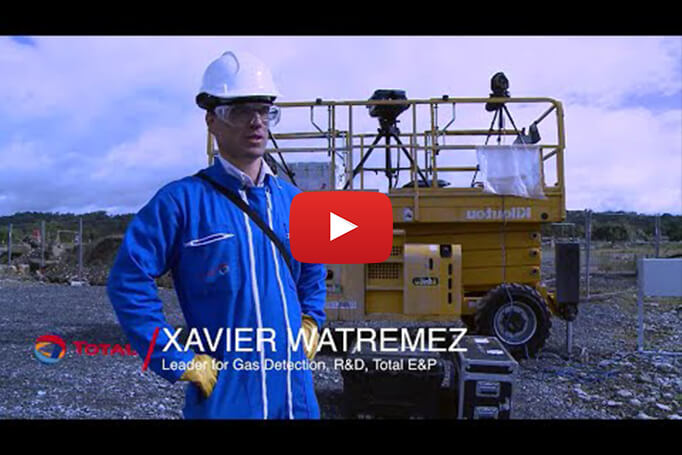
The team of Total Energies Pau Lacq in France used the Hyper-Cam for an R&D project to demonstrate the real-time 3D reconstruction of methane gas clouds. During the experiment, three Hyper-Cams were installed around the area being observed and networked to a central computer. Each Hyper-Cam produced in real time a radiometrically calibrated hyperspectral image. The computer merged the hyperspectral data from the imagers to compute and display the 3D cloud as well as to estimate the leak rate.
Watch the video to discover the full story
Infrared imaging can help visualize fugitive emissions and small gas leaks under various environmental conditions and industrial contexts. As many gases are toxic and/or flammable, like natural gas (CH4), efficient gas detection from a remote location is advantageous for safety purposes. The selectivity brought by high-resolution infrared hyperspectral imaging allows to identify the chemical nature of the gases, reducing at the same time the frequency of false alarms.
Frequently asked questions
If I want to survey my facility during winter time with your technology, is snow a problem?
Not at all! Our hyper-cam airborne mini works, whether in daylight or nighttime, and even over snow!
I need to survey my offshore facility and underwater installations. Is it still possible to detect methane?
Yes! Our hyperspectral imaging technology works even over water.
Do hyperspectral technologies detect only methane?
Our technologies can not only detect methane, but also other gases of interest, like hydrocarbons, NO2, SO2, as well as many other VOCs.
What is hyperspectral imaging?
An hyperspectral camera can see hundreds of colors of light, including ones our eyes can’t see, like infrared light. This is why we reveal the invisible! Now, methane gas absorbs and/or emits some of that infrared light at specific wavelengths corresponding to its molecular specificities (like a fingerprint).
Our camera can scan your facility and if methane or other gases are in the air, it will detect them and reveal where they are. This technology really helps you being compliant quickly and efficiently.
Is your detection technology armful for people on the ground?
Not at all! Hyperspectral imaging is completely safe for humans and also harmless to the environment.
What kind of detection sensitivity can you achieve?
Hyperspectral imaging in the long-wave infrared (LWIR) region operates based on the thermal infrared emission of gases and surfaces. The detection sensitivity thus depends on the temperature difference between the gas and background (also known as thermal contrast) as well as weather, sensor and aircraft parameters. In typical conditions, an emission rate detection sensitivity of 3 kg/hr with over 90% Probability of Detection (PoD) can be achieved.
Will hyperspectral technology be able to detect methane from an unlit flare?
Yes, our technology is able to reveal methane emissions from unlit flares.
Can your hyperspectral technology detect and identify multiple emission points on a single site?
Yes, hyperspectral technology, especially the airborne ones, offers the spatial resolution needed to pinpoint distinct emission sources within a single site. With a typical spatial resolution of 25 cm per pixel, it enables equipment-level localization. This allows clients to quickly decide on the proper course of action.
Volcanology
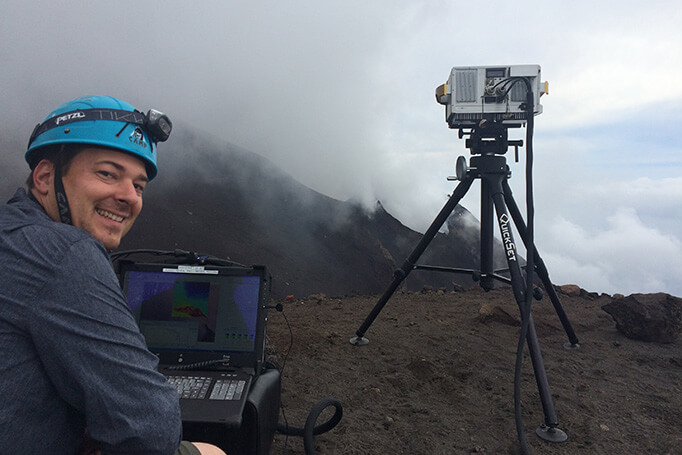
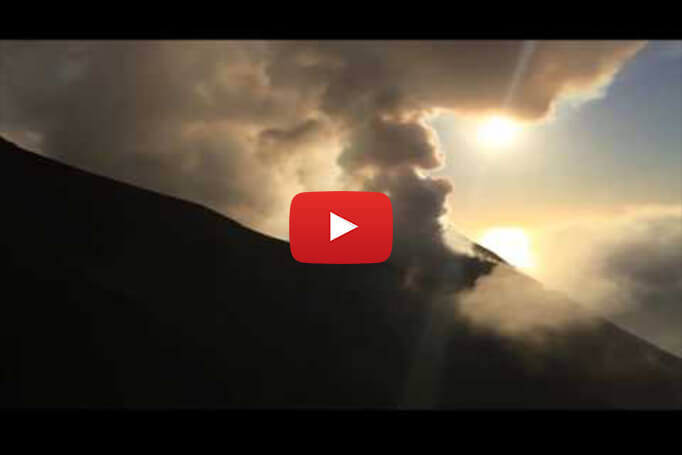
The unpredictable behavior of volcanos make infrared remote sensing a very attractive investigation tool for surveillance and academic purposes. Passive infrared hyperspectral imaging allows the detection and identification of multiple gases like sulfur dioxide (SO2) and silicon fluoride (SiF4) coming out from craters and fumaroles, from distant locations, without the need of additional equipment.
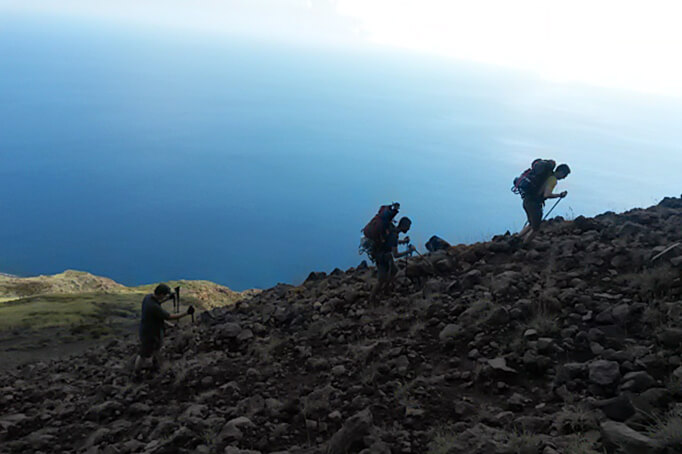
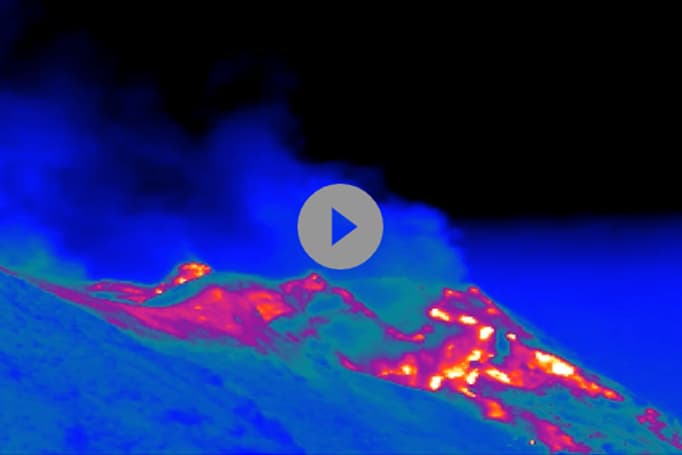
One of our Field Applications Scientist, Marc-André Gagnon, along with a team of French scientists from the Université Blaise Pascal, climbed the Stromboli volcano, in Italy, to gather hyperspectral thermal imaging data of its eruption with the Telops Hyper-Cam.