


Neutronis™ Neutron Radiography System
Bring neutron radiography into your own laboratory with an on-site system that reveals light and hydrogen-rich materials hidden inside dense assemblies, complementing conventional X-ray inspection.
Neutronis™ Neutron Radiography System
Contact sales or request a quote
Contact usDescription
For decades, neutron radiography has provided insights that conventional X-ray inspection cannot deliver, but access has largely depended on specialized high-flux reactors or large accelerator facilities. Neutronis™ changes that model by bringing neutron imaging on site.
Neutronis combines a compact neutron source, the Neutronic[i] high-efficiency MCP-based detector and advanced acquisition, reconstruction and analysis software in a complete imaging platform. The system enables organizations to inspect samples in-house, obtain results without the traditional delays associated with external facilities and retain control of sensitive samples and data.
Neutron imaging complements X-ray radiography rather than replacing it. While X-rays are well suited to dense structures, metallic features, geometry, cracks and voids, neutrons interact with atomic nuclei and can reveal hydrogen-rich and light materials through metals or ceramics. This makes Neutronis especially relevant for batteries and energy storage, hydrogen technologies, sealed and dense assemblies, aerospace components and advanced manufacturing. AI-powered image processing further enhances image visibility and supports faster interpretation.
Go Beyond X-Ray
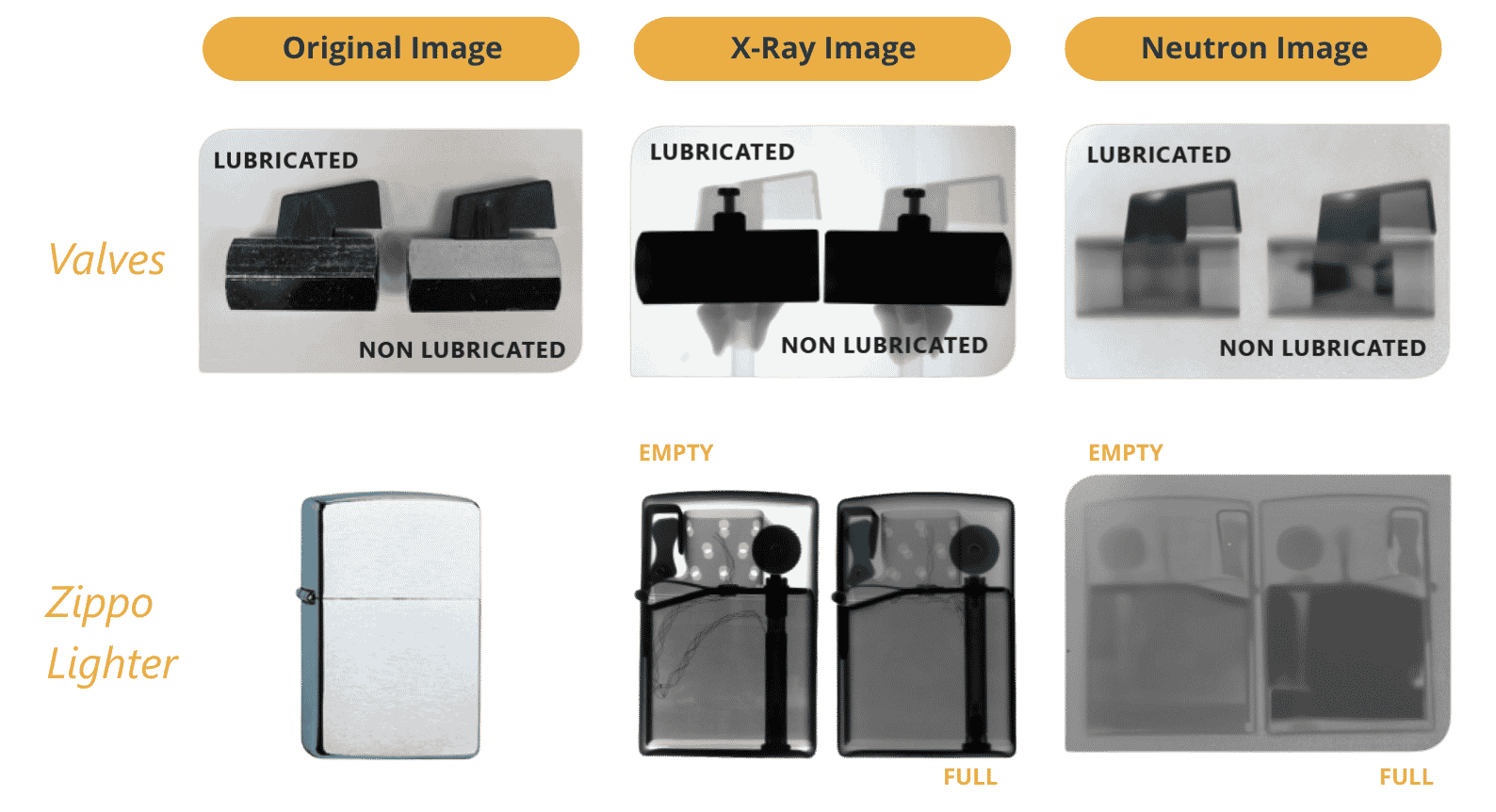
X-ray radiography is a proven and trusted method for non-destructive inspection, especially when evaluating dense structures, geometries, metallic features, cracks, and voids. But some materials and inspection questions require a different type of contrast.
That's where neutron imaging adds value.
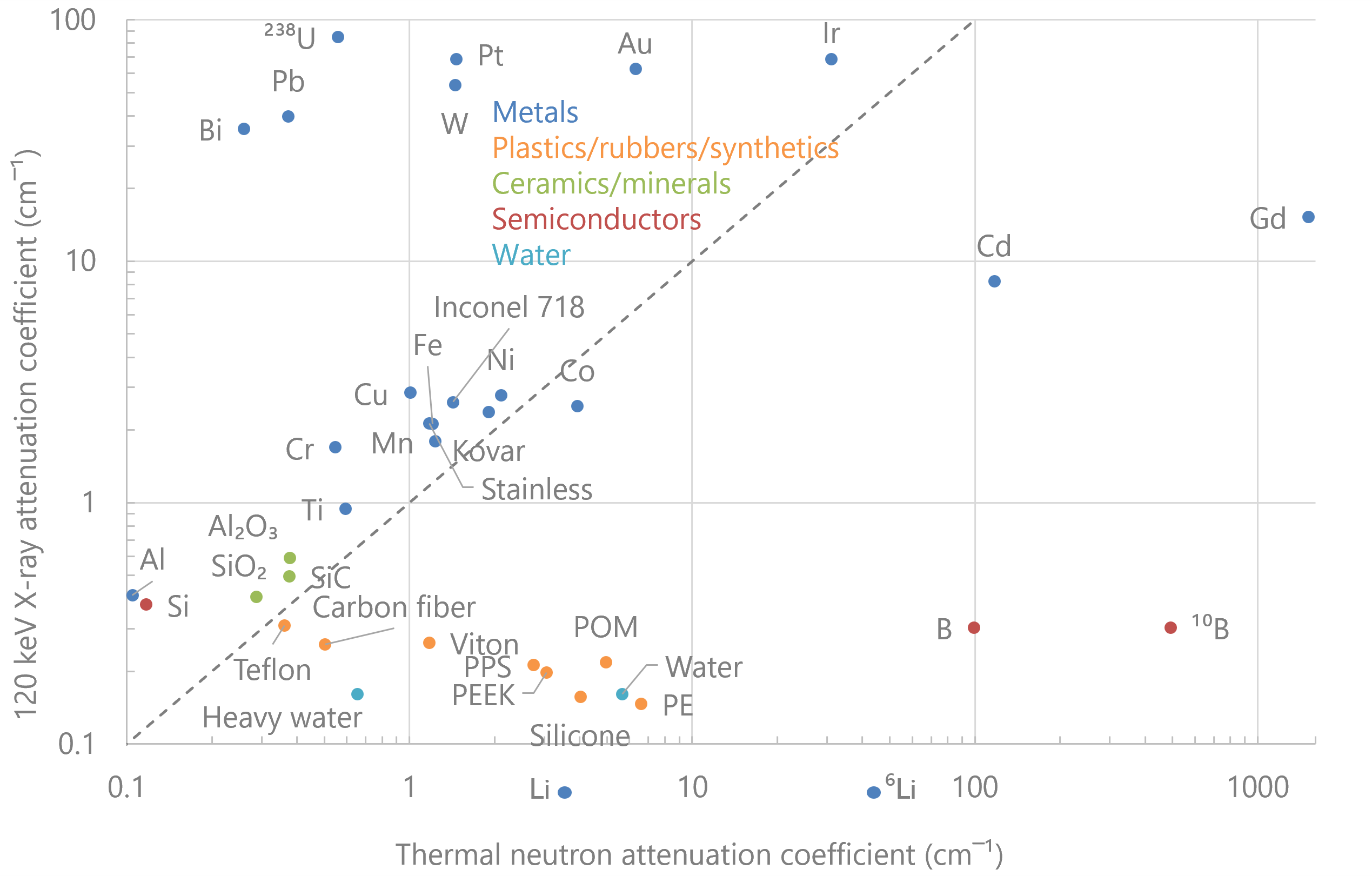
Neutrons reveal what X-rays often cannot:
- Hydrogen
- Water
- Lithium
- Boron
- Adhesives
- Lubricants
- Polymers
- Composite structures
Because neutrons interact with atomic nuclei rather than electron shells, they provide a fundamentally different source of contrast, making them highly complementary to conventional radiography.
See What Neutrons Reveal
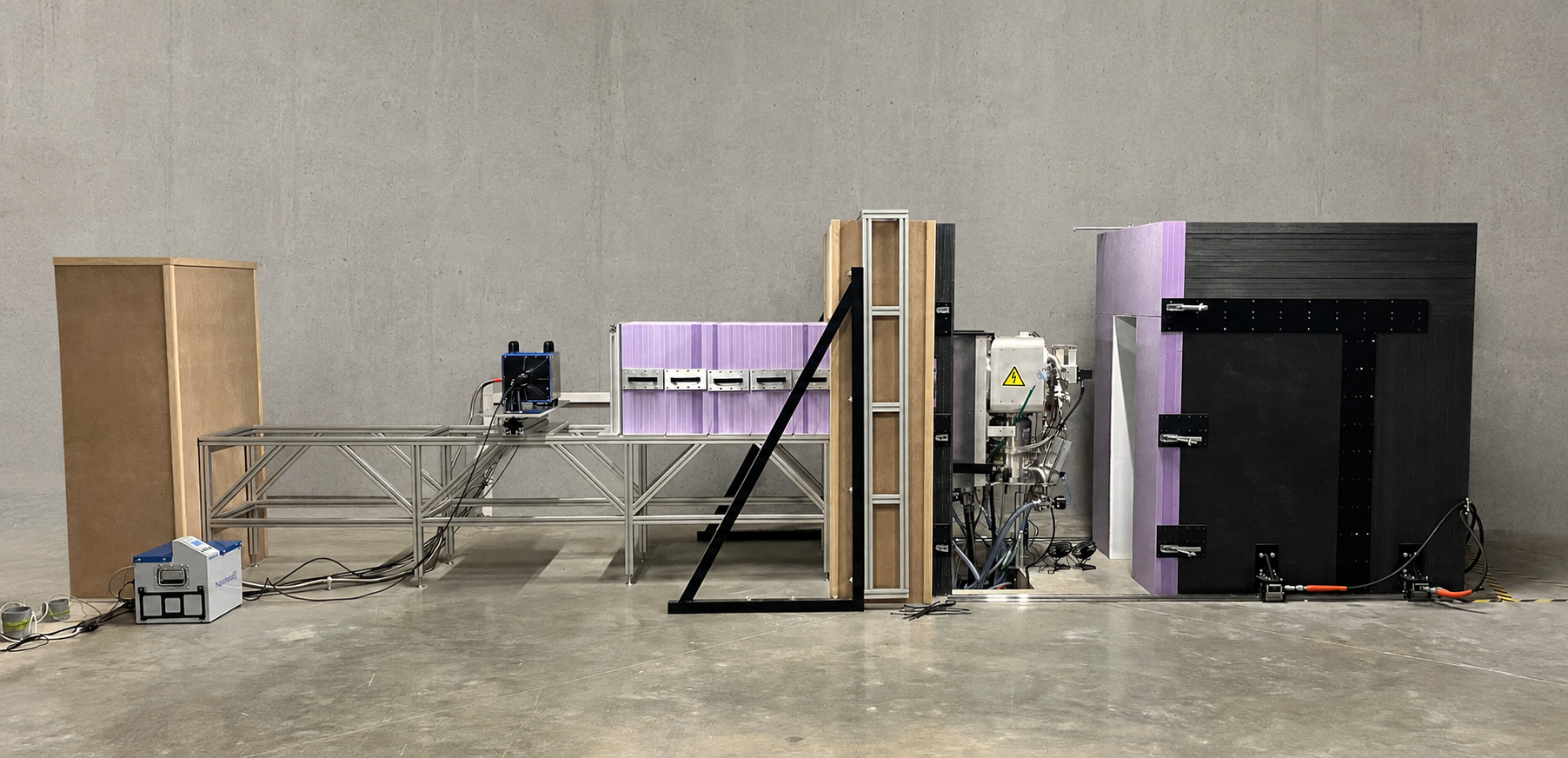
Meet Neutronis™
Neutronis™ combines three core elements:
- A compact neutron source designed for reliable, high-performance imaging Neutronic[i]
- Detector: A high-efficiency MCP-based detector delivering exceptional sensitivity and imaging resolution
- Advanced Software: Intuitive acquisition, reconstruction, and analysis tools for rapid interpretation of results.
A Complete Neutron Imaging Platform
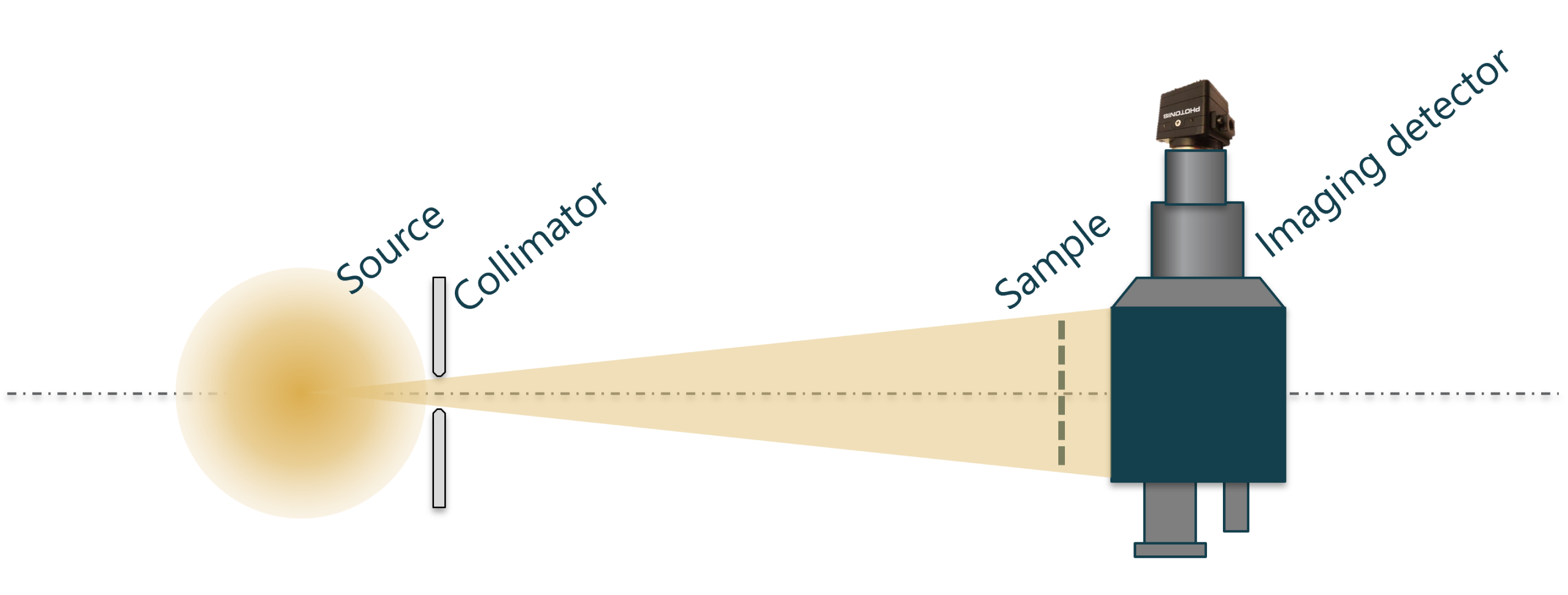
Principle of Operation
Introducing a NEW dimension to Non-Destructive Testing – Neutronis
Powered by Neutronic[i]
The Detector Technology Behind Neutronis
The Neutronic[i] detector is a 100 × 100 mm² thermal neutron imager based on Exosens' patented neutron-sensitive microchannel plate technology. The detector delivers neutron detection efficiency greater than 50%, offering more than an order of magnitude improvement compared with conventional neutron imaging approaches.
Key Features
- Patented neutron-sensitive MCP technology
- 50% thermal neutron detection efficiency
- High-resolution imaging

Documentation
Brochure/Leaflet


Have a Sample? A Hidden Defect?
Let’s Talk!
Bring us your samples and inspection challenges.
Let’s explore how neutron imaging can complement your existing X-ray inspection capabilities and help uncover what other inspection methods may miss.
Applications

Frequently asked questions
What is neutron radiography?
Neutron radiography is a non-destructive imaging technique that uses neutrons instead of X-rays to inspect the internal structure of objects. Because neutrons interact with atomic nuclei rather than electron shells, they can reveal materials that are often difficult to detect using conventional X-ray systems.
How is neutron imaging different from X-ray inspection?
X-rays primarily interact with electron shells and are excellent for imaging metals, structural features, cracks, and voids. Neutrons interact with atomic nuclei, allowing them to visualize materials that are often difficult or impossible to see with X-rays alone, including:
- Hydrogen
- Water
- Lithium
- Boron
- Polymers
- Adhesives
- Lubricants
- Organic materials hidden inside metallic structures
Neutron imaging should be viewed as complementary to X-ray inspection, providing a different type of contrast that reveals additional information about a sample.
What materials are best inspected with neutrons?
Neutron imaging is particularly effective for materials that are difficult to observe with X-rays, including:
- Water and moisture
- Hydrogen-containing materials
- Lithium in batteries
- Polymers and plastics
- Adhesives and sealants
- Lubricants
- Organic materials
- Hydrogen storage materials and fuel cells
Neutrons can reveal these materials even when they are enclosed within dense metallic structures.
What is the detector?
Neutronis is powered by the Neutronic[i] detector, a thermal neutron imager based on Exosens' patented neutron-sensitive microchannel plate (MCP) technology. The detector features:
- 100 × 100 mm² active imaging area
- Greater than 50% thermal neutron detection efficiency
- High-resolution imaging
- Nanosecond timing capability
- Modular, upgradeable architecture
This technology delivers detection efficiency more than an order of magnitude higher than conventional neutron imaging techniques
Can Neutronis replace X-ray inspection?
No. Neutronis is designed to complement X-ray inspection rather than replace it.
X-rays and neutrons provide different types of contrast and reveal different information. By combining both techniques, researchers and engineers gain a more complete understanding of internal structures, fluid distribution, material composition, and hidden defects
What industries benefit most from neutron imaging?
Neutronis enables battery developers, hydrogen researchers, aerospace engineers, advanced manufacturers, and industrial inspection teams to bring neutron radiography directly into their own laboratory and uncover information that conventional X-ray inspection cannot reveal.