


Quantum Dot SWIR Imaging: Unlocking the Full Potential of SWIR
The Promise and Challenge of SWIR Imaging
Short-wave infrared (SWIR) imaging reveals information that conventional visible-light cameras cannot. SWIR wavelengths can penetrate haze, smoke, plastics, paint layers, and even biological tissues while providing valuable insights into material composition. These capabilities make SWIR an attractive technology for industrial inspection, security, healthcare, scientific imaging, and environmental monitoring.

Despite its advantages, SWIR remains a niche technology, not because of limited performance, but because its cost has outweighed the benefits for many applications.
That equation is now beginning to change. Colloidal quantum dot (CQD) technology is introducing a more scalable and cost-effective approach to SWIR sensor manufacturing, opening the door to wider deployment across industries that previously viewed SWIR as out of reach.
Why Traditional SWIR Technologies Remain Expensive
Today's dominant SWIR detector technologies, including InGaAs, MCT, and T2SL, rely on complex epitaxial growth processes and specialized substrate materials. While these technologies deliver excellent performance, they are expensive to manufacture and challenging to scale for high-volume production.
As a result, SWIR imaging has traditionally been limited to applications where performance outweighs cost considerations. Many industries have continued to rely on visible or near-infrared imaging systems, even when SWIR could deliver significantly more information.
This manufacturing challenge created the opportunity for a different approach.
Quantum Dot SWIR Imaging: Breaking the Cost Barrier
Colloidal quantum dot photodetectors offer a fundamentally different route to SWIR imaging. Rather than relying on costly semiconductor growth processes, quantum dots are nanoscale crystals synthesized in solution and deposited directly onto silicon readout circuits.
By leveraging mature silicon manufacturing infrastructure, this approach has the potential to reduce production complexity, lower sensor costs, and enable larger-scale manufacturing. The result is a technology platform that can make SWIR imaging accessible to a much broader range of markets.
The commercial impact of this transition is already becoming visible. The first commercially available CQD SWIR cameras entered the market approximately five years ago, with Exosens Imaging UK (formerly Emberion), now part of Exosens, pioneering the technology. Since then, SWIR camera prices have steadily decreased while adoption has continued to expand.
As the cost of implementation falls, more organizations are evaluating SWIR not as a specialized capability, but as a practical and economically viable imaging solution.
Spectral Flexibility Built into the Material
Beyond lower cost, quantum dots offer exceptional spectral flexibility. By adjusting the size and composition of the nanocrystals during synthesis, detector response can be tailored to specific wavelength ranges, including extended SWIR regions beyond the reach of standard InGaAs sensors.
This tunability also enables multiband imaging on a single sensor. Different quantum dot materials can be integrated onto the same focal plane array, allowing simultaneous capture of multiple SWIR bands without the need for separate detector stacks.
The result is a compact imaging solution capable of supporting applications such as material identification, gas detection, de-camouflaging, adverse-weather imaging, and advanced spectral analysis. By combining multiple spectral channels into a single device, quantum dot technology can simplify system design while expanding imaging capabilities.
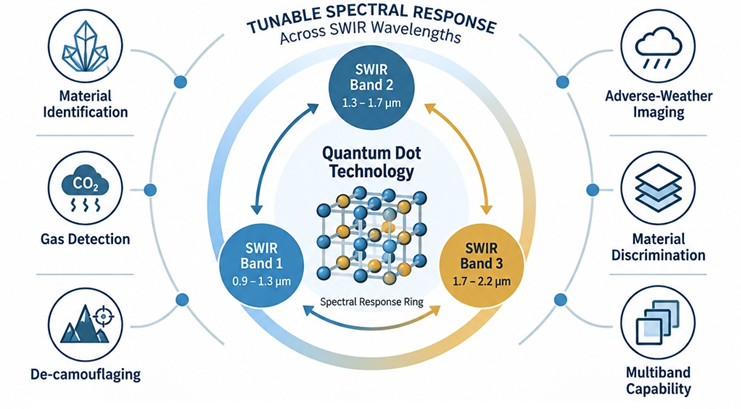
Figure 1: Quantum dot technology enables tunable multiband SWIR imaging for advanced sensing and material analysis.
Looking Beyond SWIR
The same materials science that enables tunable SWIR detection may eventually extend into the mid-wave infrared (MWIR) region.
At operating temperatures around -60°C, CQD detectors have demonstrated performance comparable to MCT technologies while offering the possibility of substantially lower system costs. Although still an emerging opportunity, it highlights the longer-term potential of quantum dot platforms beyond SWIR imaging alone.
Public Safety and Security
SWIR imaging delivers reliable performance in smoke, haze, dust, and other challenging visibility conditions. From firefighting and hotspot detection to border security and surveillance, more affordable SWIR sensors could enable wider deployment across fixed, mobile, and airborne platforms.
Industrial Inspection and Automation
SWIR reveals features and defects that are difficult to detect with visible-light imaging alone. Applications range from plastic part inspection and quality control to plastics recycling and mineral sorting, where lower sensor costs can make large-scale deployment more practical.
Healthcare and Diagnostics
By penetrating biological tissue more effectively than visible and near-infrared light, SWIR can support applications such as ophthalmology, melanoma detection, and tissue assessment. Cost-effective CQD sensors could also accelerate the adoption of portable diagnostic devices, wearable biosensors, and point-of-care healthcare solutions.
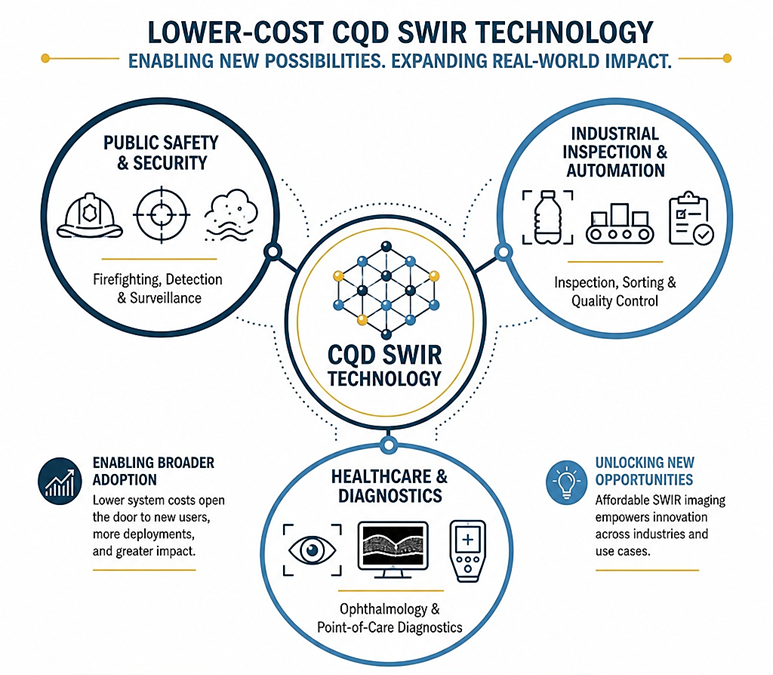
Figure 2: Affordable CQD SWIR sensors are enabling broader adoption and unlocking new application opportunities.
From Innovation to Industrialisation: Exosens and Exosens Imaging UK (formerly Emberion)
The acquisition of Exosens Imaging UK (formerly Emberion) by Exosens represents an important milestone in the commercialization of quantum dot SWIR technology.
Exosens Imaging UK's (formerly Emberion) pioneering work helped establish some of the first commercial CQD SWIR imaging solutions. Combined with Exosens' expertise across imaging technologies from UV to LWIR, the technology now benefits from stronger manufacturing capabilities, broader application knowledge, and global market reach.
Together, these strengths position quantum dot imaging for wider adoption across industrial, security, scientific, and healthcare markets.
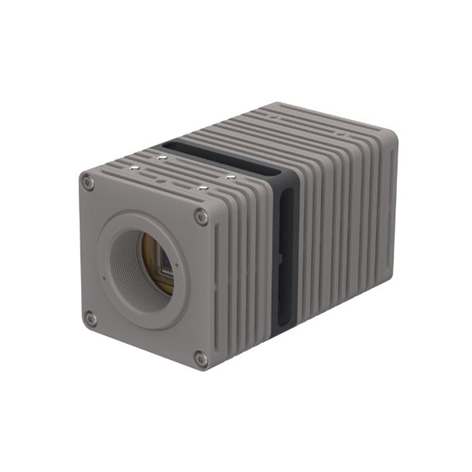
Figure 3: Exosens SWIR VS20 camera based on CQD technology
From Niche Technology to Mainstream Imaging
SWIR imaging has long been limited by high detector costs. Quantum dot technology is changing that through more scalable manufacturing, lower costs, and greater spectral flexibility. As the technology matures, it has the potential to move SWIR from a niche sensing capability to a mainstream imaging technology, enabling new applications and expanding access to advanced spectral imaging.
Contenu connexe


San Francisco.

DE Feb 02nd 2027 A Feb 04th 2027
SPIE Photonics West 2027
Join Exosens at Photonics West Exhibition 2027, taking place in San Francisco

San Francisco.
DE Jan 30th 2027 A Jan 31st 2027
SPIE BIOS 2027
Join Exosens at BiOS 2027, January 30–31 in San Francisco, to discover our optical imaging technologies.

Oct 08th 2026
Exosens soutient les SMR américains
Exosens accompagne l’accélération du déploiement des technologies nucléaires de nouvelle génération aux États-Unis


Sep 17th 2026
Exosens relève ses objectifs 2026
Exosens relève ses objectifs pour l’exercice 2026, grâce à une montée en cadence plus rapide que prévu des capacités de production et à une forte dynamique commerciale

Aug 31st 2026
Optical System Alignment
The Lens Was Assembled Correctly, So Why Does the MTF Test Fail?